The Magnificent Cake
This chapter is dedicated to describing Stanley's exploration from the east to the west coast of Africa. On page 49, we hear about Stanley's brutality with native Africans. They describe him as practically feasting on death and fighting for the sole purpose of drawing blood, "We have attacked and destroyed 28 large town and three or four score villages." Humanitarian groups, Aborigines Protection Society and the Anti-Slavery Society sure thought Stanley was evil, saying that he "shoots negroes as if they were monkeys." Why would he do this when he was on an expedition? To establish dominance? Or did he feel threatened, and so fought out of protection or self defense? Clearly the native's primitive bows and arrows were no match for European rifles. One would think that his presence would be enough to intimidate the Africans, so was Stanley fighting simply to kill?
As a journalist, Stanley wrote many accounts of his trip. His first book was titled Through the Dark Continent. Other volumes were titled In Darkest Africa and My Dark Companions and Their Strange Stories. How are these titles significant and representative of Stanley's feelings, and that of other Europeans, regarding Africa and its people? Since Stanley's 3 white companions all died before the end of the expedition, there is no way to know if his account is truthful. As we know, Stanley wasn't the most emotionally stable guy, so some of it must have been exaggerated, but which parts are most likely to have been romanticized? What picture was he trying to paint for people back in Europe?
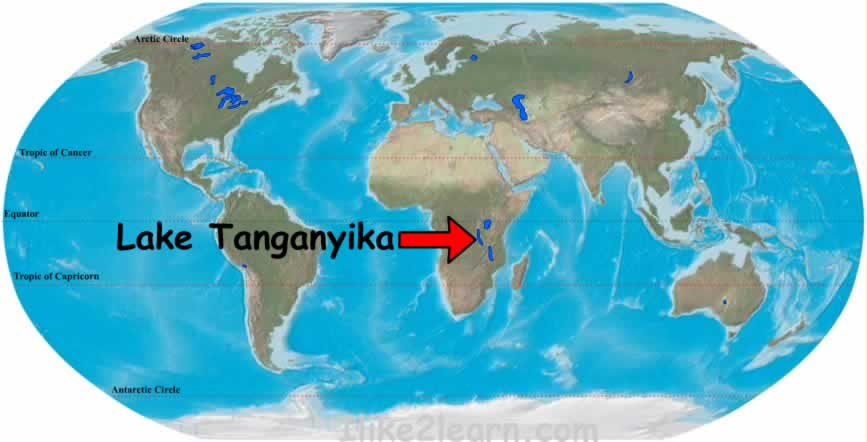
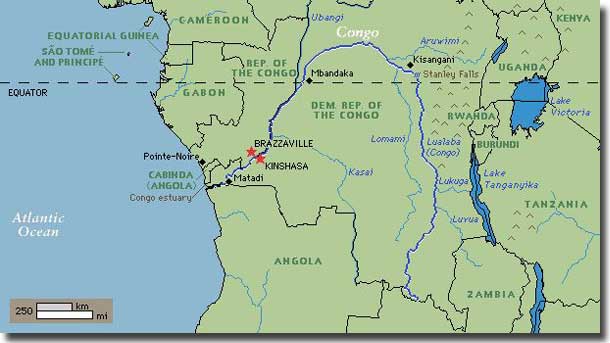
After finding Livingston at Lake Tanganyika on the east, then followed a river known by the locals as the Lualaba. He suspected that it was either the Congo River or the Nile. An article from the Daily Telegraph comments on his findings. He found that the Congo River curves as if its shape is a semicircle, so part of the top half is above the equator, and the rest of below. Because of its proximity to the equator, the region is dominated by sharp differences in weather, when it is rainy above the line, it is dry below. The last part of his journey was through the rainy season. Many died from starvation and disease, others went crazy.
Quiz Questions
1. In some parts of Stanley's records he reflects on himself as if speaking as an African native:
"How can he be a good man who comes for no trade, whose feet you never see, who always goes covered with clothes, unlike all other people? No, there is something very mysterious about him, perhaps wicked, perhaps he is a magician, at any rate it is better to leave him alone and not disturb him" (53).
In these moments, was Stanley experiencing true guilt? Was he actually recognizing how wicked his actions were?
2. When Stanley returned from his trip he condemned the Arab slave trade, voiced his desire to convert the Africans, and discussed "the general indecency of their nakedness," as if wanting to enlighten and uplift the continent (57). Was he speaking the truth? Or was he really more focused on the economic potential he saw in Africa? What was in it for him?
3. What were Stanley's true motives for exploring Central Africa?
4. Why were the English uninterested in Africa?
5. How did Stanley affect King Leopold's desire for Africa? How does it relate to the title of the chapter, "The Magnificent Cake?"



No comments:
Post a Comment